Published: 02 Feb 2026 · Volume 1, Issue 1 · Open Access (CC BY-SA 4.0)
Primary affiliation: Department of Chemical Engineering, Faculty of Industrial Technology, Institut Teknologi Bandung, Jl. Ganesa No. 10, Bandung, Indonesia 40132
Principal contact for editorial correspondence: Hary Devianto
Authors and affiliations
Virda Nur Lu'lu
Master's Student, Department of Chemical Engineering, Faculty of Industrial Technology, Institut Teknologi Bandung, Indonesia.
Hary Devianto*
Lektor Kepala in Chemical Engineering, Department of Chemical Engineering, Faculty of Industrial Technology, Institut Teknologi Bandung, Indonesia.
Pramujo Widiatmoko
Lektor Kepala in Chemical Engineering, Department of Chemical Engineering, Faculty of Industrial Technology, Institut Teknologi Bandung, Indonesia.
Abstract
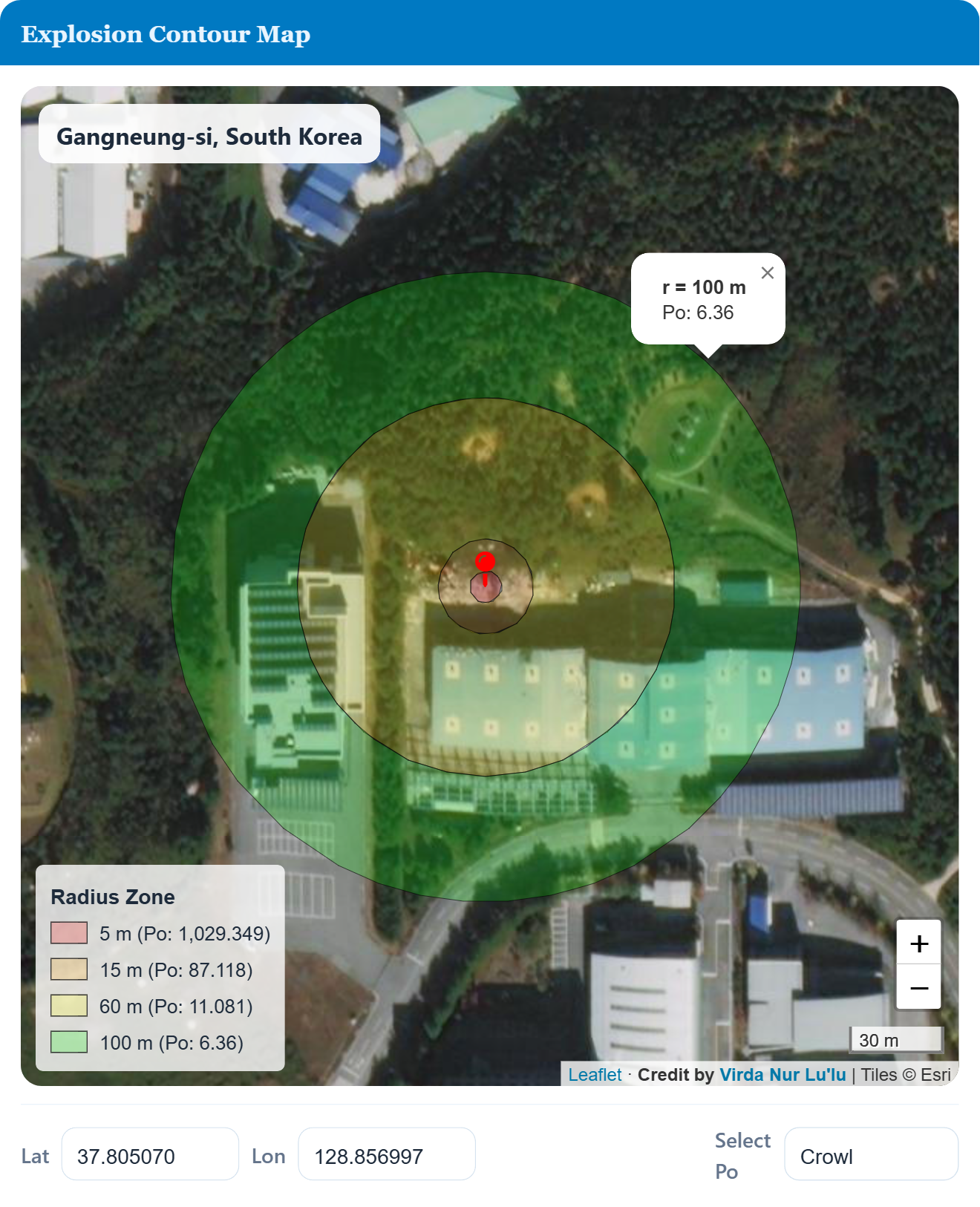
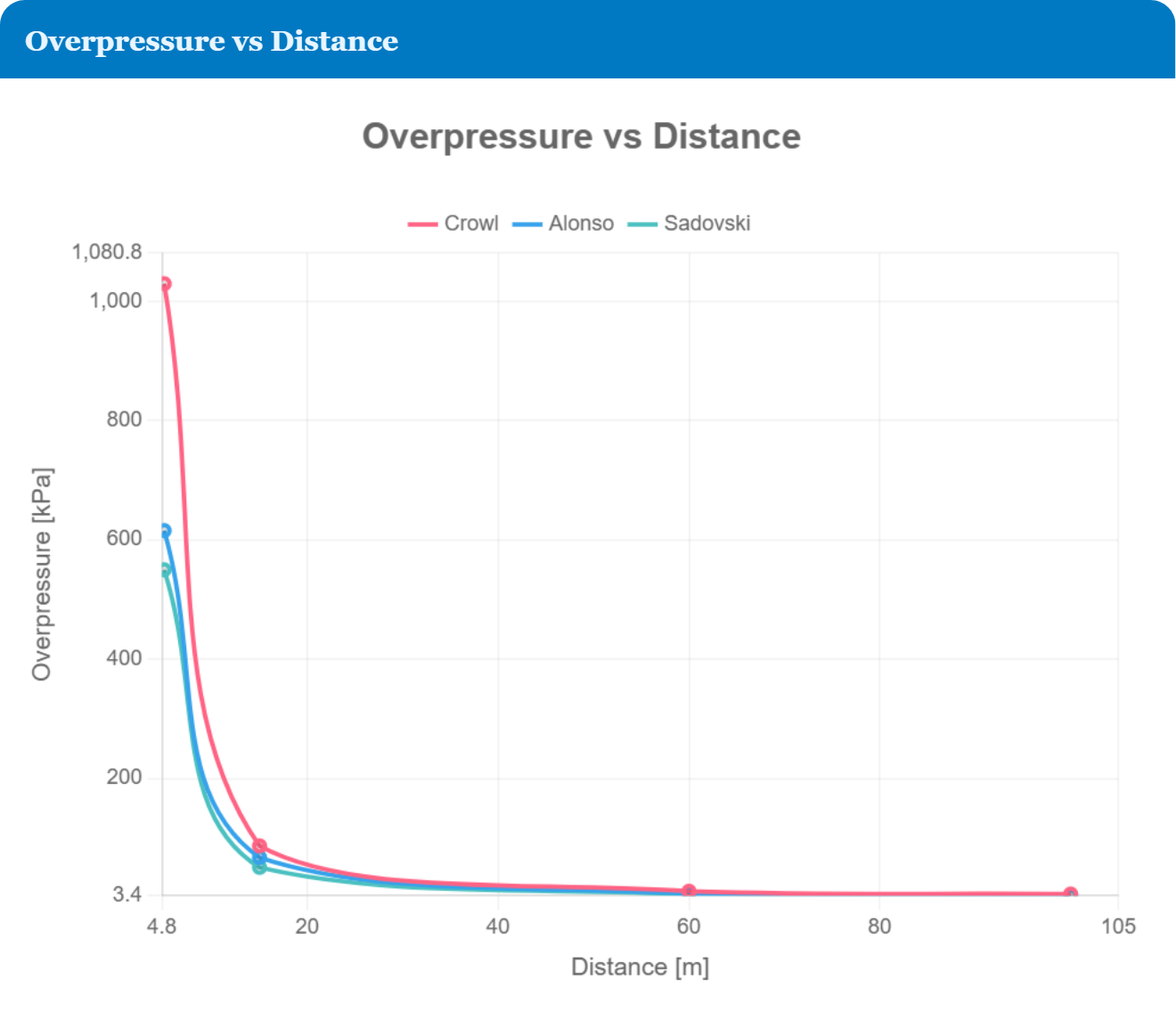
Hydrogen deployment is expanding across emerging low-carbon energy systems, creating a pressing need for rapid, transparent, and auditable blast-consequence screening to support early-stage hazard zoning. This study develops a web-based simulation platform that implements a unified TNT-equivalent framework for comparative prediction of hydrogen explosion consequences from minimal inputs, namely inventory volume and evaluation distance. The platform converts hydrogen volume to mass, estimates TNT-equivalent charge using an energy-based formulation with scenario efficiency, applies Hopkinson-Cranz cube-root scaling, and predicts peak side-on overpressure using three published empirical correlations: Crowl and Louvar, Alonso, and Sadovski. To improve methodological consistency, all correlations are executed under harmonized assumptions and export calculation logs for traceability and auditability. Model performance was evaluated against a Type-IV high-pressure hydrogen vessel-burst dataset with measurements at 2-18 m. Within the intact-sensor range of 6-18 m, Alonso showed the best agreement with experiment, with a mean absolute error of 6.006 kPa and R² of 0.999, whereas Crowl and Louvar and Sadovski produced mean absolute errors of 18.136 kPa and 17.164 kPa with R² values of 0.985 and 0.993, respectively. The framework was further demonstrated using a 50 kg TNT-equivalent Gangneung 2019 plausibility case, yielding predicted overpressures of 50.9-86.7 kPa at 15 m and 3.58-6.34 kPa at 100 m, in line with reported severe local structural damage and widespread glazing breakage. These findings show that the proposed platform offers a reproducible and decision-oriented screening basis for hydrogen safety assessment while clarifying the distinct roles of conservative and representative empirical models in engineering practice.
Research Highlights
- Rapid and consistent screening for hydrogen infrastructure safety decisions.
- Unified multi-model workflow (Crowl, Alonso, Sadovski) to replace fragmented manual spreadsheets.
- Clear distinction between conservative versus representative estimates for early-stage risk screening.
- Compute TNT-equivalent mass (WTNT) using energy ratio and scenario efficiency (η).
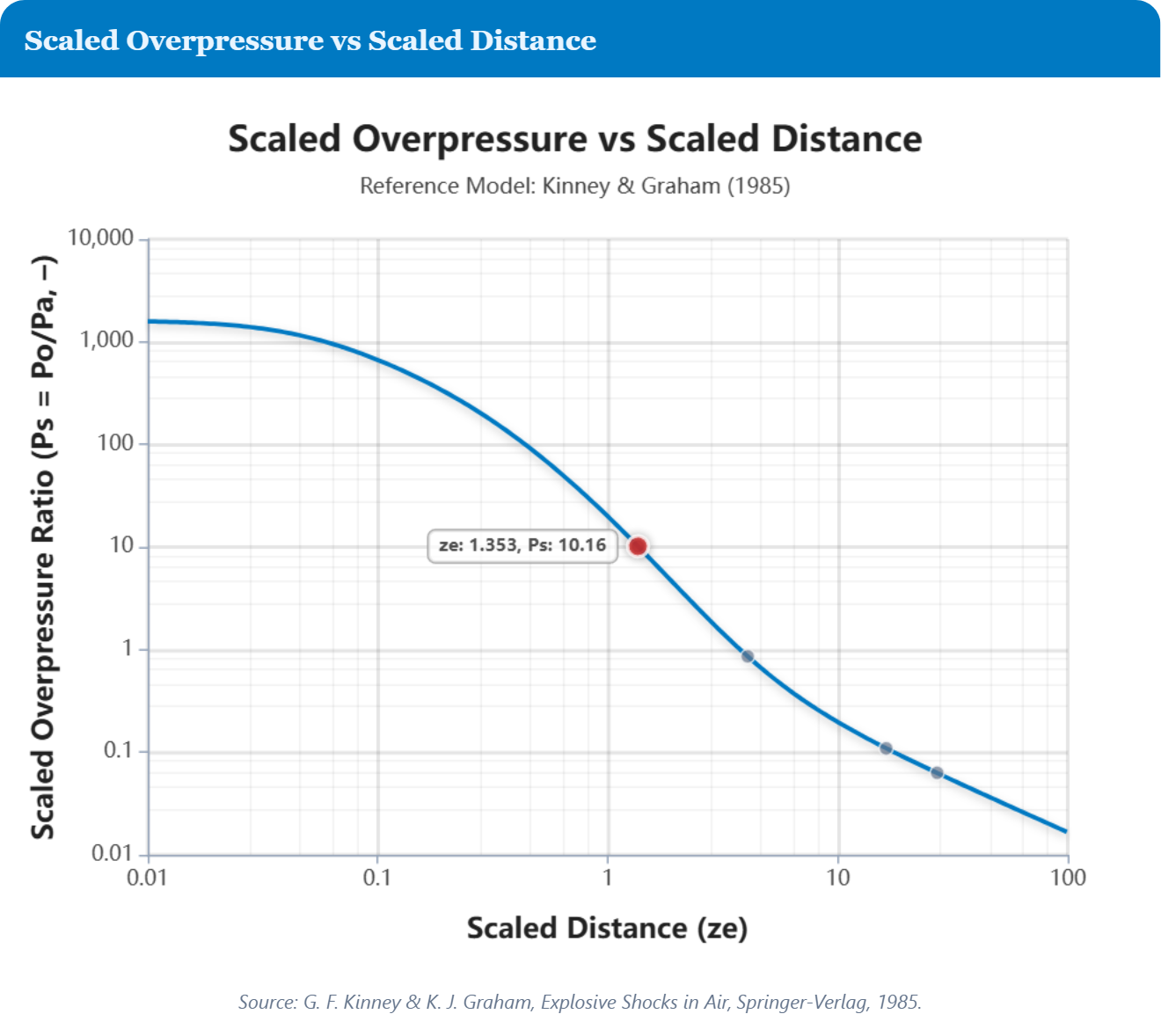
- Apply cube-root scaling, Z = R / WTNT1/3, to normalize distance.
- Predict peak side-on overpressure (Po) using Crowl, Alonso, and Sadovski correlations, with extrapolation flagged beyond validity ranges.
- Validate with a hydrogen PVB dataset (Han et al., 2025) and apply the workflow to the Gangneung incident (WTNT ≈ 50 kg).
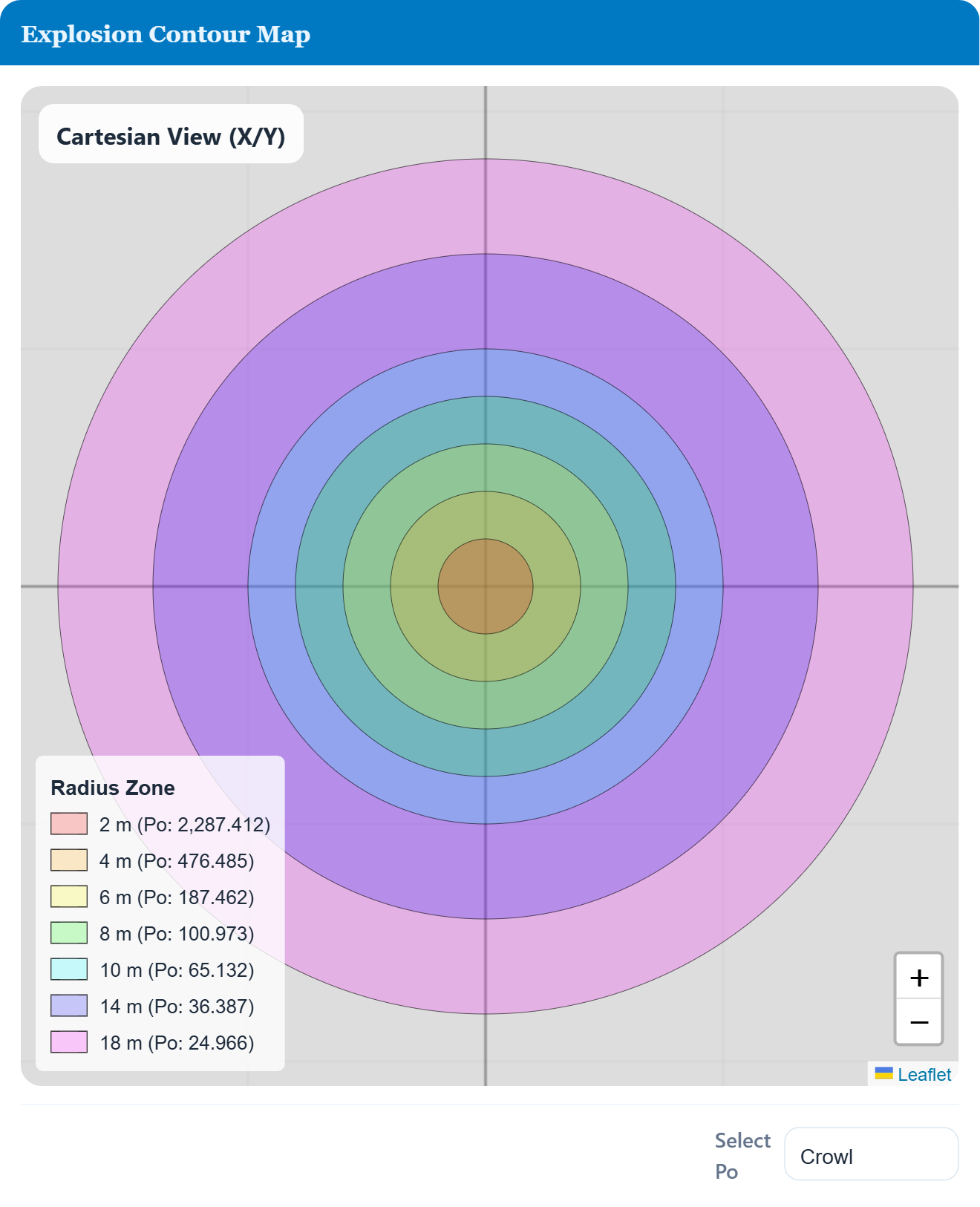
- PVB case (WTNT = 9.53 kg): Alonso shows the best agreement (−34% to 5%).
- Crowl remains conservative (8% to 85%), while Sadovski underpredicts (−38% to 11%).
- Gangneung case (WTNT ≈ 50 kg): Po ≈ 20.2–32.6 kPa at 15 m and Po ≈ 1.95–3.59 kPa at 100 m.
- Practical guidance: Crowl for conservative screening, Alonso for representative estimates in the tested burst scenario.
- Framework development: Established a simulation framework to comparatively evaluate empirical models (Crowl, Alonso, Sadovski) for hydrogen explosions.
- Validation results: Experimental validation indicates that the Alonso model delivers the highest accuracy, while Crowl provides conservative estimates and Sadovski tends to underpredict.
- Case-study alignment: Application to the Gangneung incident yields pressure predictions consistent with observed structural damage.
- Key contribution: Delivered a validated, web-based screening tool to support early-stage safety assessments of hydrogen infrastructure.
Research Charts
Gangneung Incident Case
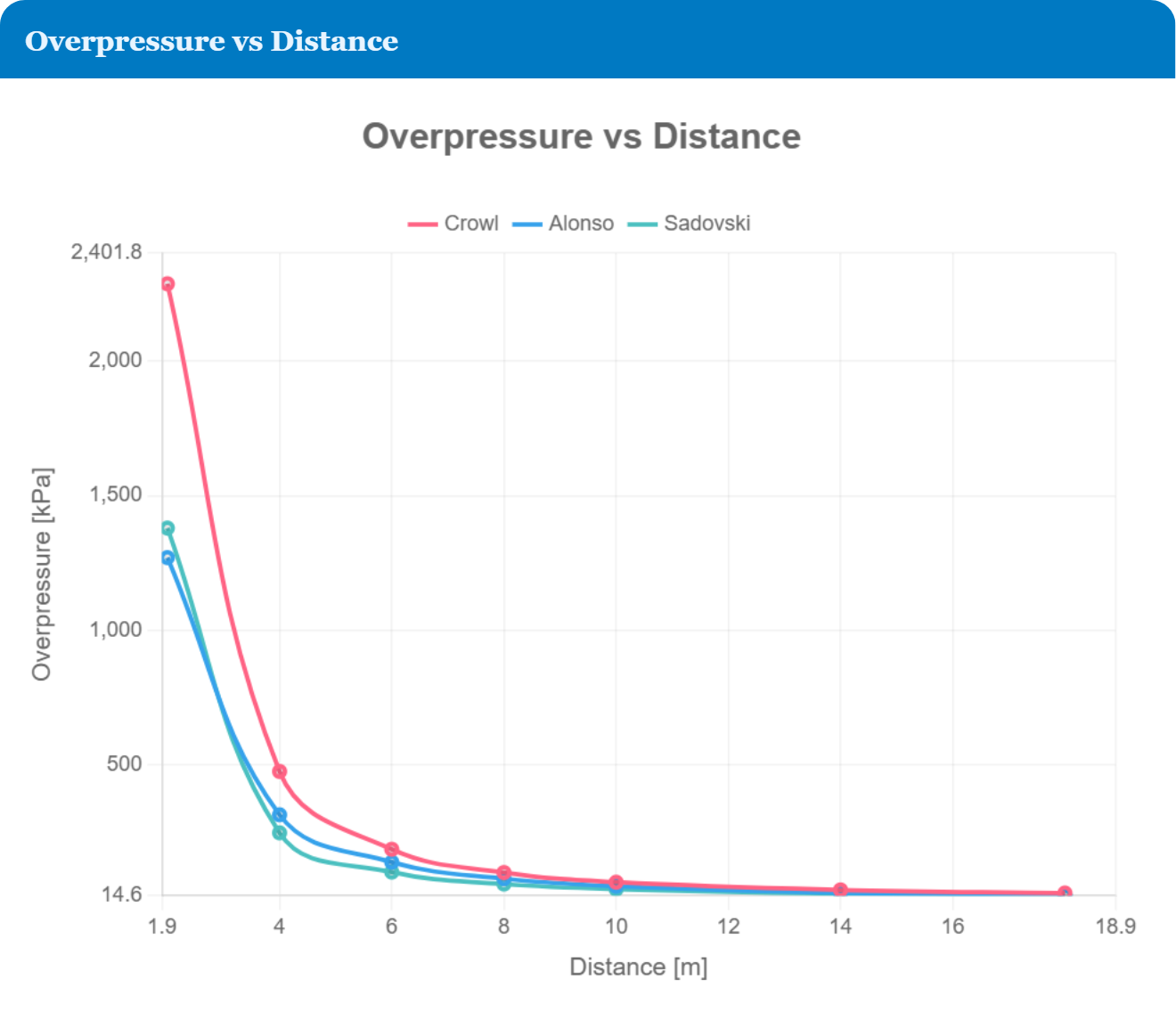
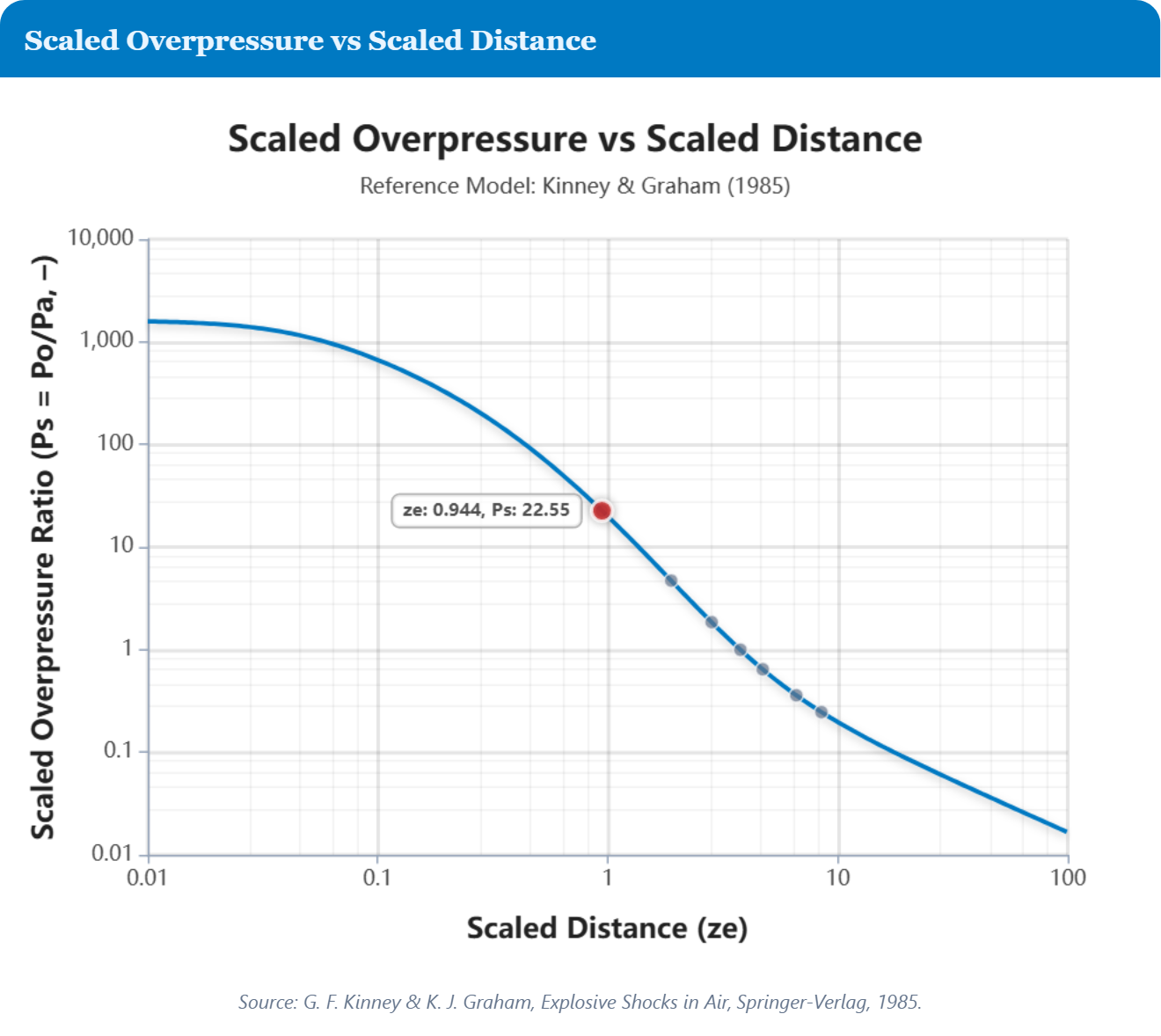
Figures below summarize the scenario-based overpressure distribution, distance-response trend, and scaled-distance relationship for the Gangneung hydrogen explosion plausibility assessment.
Hydrogen Explosion Experiment Validation
These figures present the experimental validation set used to evaluate model agreement in the Type-IV hydrogen vessel-burst scenario.
Keywords
Blast consequence screening; Hopkinson-Cranz scaling; Hydrogen explosion; Peak side-on overpressure; TNT equivalent
How to cite
Virda Nur Lu'lu, Hary Devianto, Pramujo Widiatmoko (2026). Comparative Simulation and Modeling of Hydrogen Explosion Consequences Based on TNT Equivalent. Xplosion Research Archive, 1(1).